
Know Before You Go
For up-to-date information on Yosemite's road conditions, call the 24-hour National Park Service Road Status line at 209.372.0200. Select option #1 from both menus. You can find additional information online on National Park Service Yosemite Current Conditions.
Road Conditions
Winter Entrances
Three of Yosemite National Park's entrances stay open year-round: CA 41 from Oakhurst, CA; 140 from Mariposa; and CA 120 West from Groveland. Due to the amount of snow Yosemite Park gets each winter, certain roads are closed to vehicles until Spring. See Road Access below for more information.
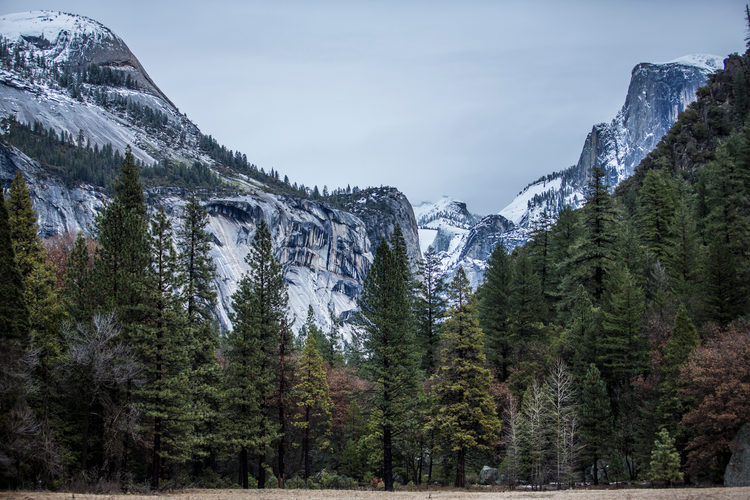
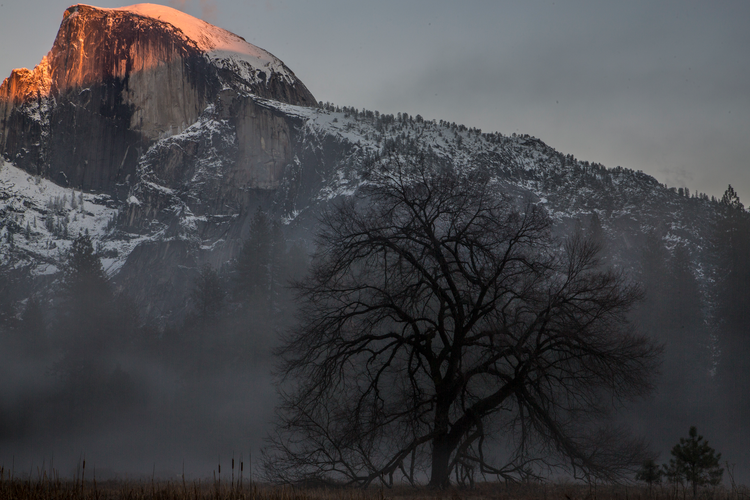
Winter Road Closures
Road closures typically begin in November and end in May. The following roads close each winter;
- Tioga Road (CA 120 East) When Tioga Road is closed, there is no access to Yosemite's high country by car. The eastern entrances to the park at Lee Vining Canyon via Highway 395 is closed when the road is closed. Tioga Road typically opens in late May/June and closes in October/November.
- Glacier Point Road When the Glacier Point Road is closed for the winter, the first 5 miles are plowed and maintained to provide access to Badger Pass Ski Area. The road beyond Badger Pass Ski Area is groomed for cross-country skiing. Glacier Point Road is typically closed Mid-December through March.
- Mariposa Grove Road While Mariposa Grove Road is closed, visitors can travel the road on foot, snowshoes, or skis to access the Mariposa Grove. The distance from the parking lot at the road entrance gate to the Mariposa Grove is two miles.
Public Transportation
Public transportation to Yosemite Valley is available every day of the year, weather permitting. In the park, the Yosemite Valley free shuttle bus also operates year-round. Find more information at Public Transportation page.
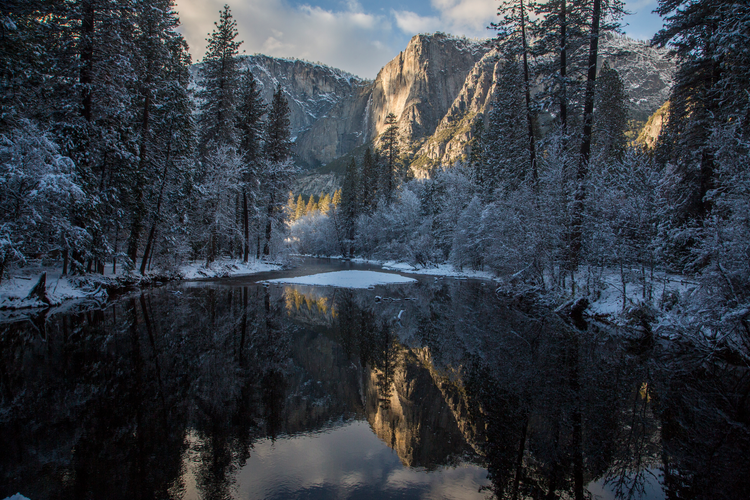
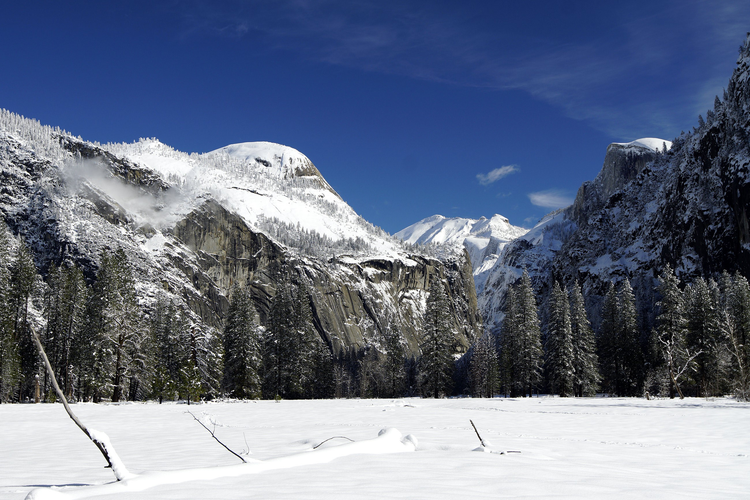
Road Condition Report
- Wawona Road
(Continuation of Highway 41 from Fresno)
(Information about Highway 41 outside Yosemite) - Big Oak Flat Road
(Continuation of Hwy 120 from Manteca into Yosemite Valley)
(Information about Highway 120 outside Yosemite)
- El Portal Road
(Continuation of Highway 140 from Merced)
(Information about Highway 140 outside Yosemite) - Hetch Hetchy Road (Open 8:00 am to 5:00 PM)
- Badger Pass Road
- Mariposa Grove Road
When open, road is open only to vehicles displaying disability placards. All others must use the free shuttle from Mariposa Grove Welcome Plaza (near South Entrance). - Glacier Point Road (beyond Badger Pass Ski Area)
- Tioga Road
(Continuation of Highway 120 through the park)
(Information about Highway 120 outside Yosemite)
Tire Chains
Tire Chain Requirements
All vehicles entering Yosemite National Park during winter conditions must carry snow chains. Call (209) 372-0200, 1, 1, for the most up-to-date road info. See Tire Chains below for more information.
In severe winter conditions, using tire chains at Yosemite National Park is a requirement and is determined by the National Park Service. When entering a designated Chain Control Area, federal law requires that you carry tire chains in your vehicle at all times—even if your vehicle has snow tires and four-wheel-drive. The National Park Service can require snow chains on any vehicle on any park road at any time. If you don't have tire chains, the park rangers will deny your entrance into the park. Traveling without tire chains in your vehicle—or on your tires when required—will result in fines up to $5,000. Find more information at National Park Service Tire Chains.
There are three categories of chain requirements: R1, R2, and R3.
R1 Chains or snow tires are required on the drive axle of all vehicles. Two-wheel drive vehicles with snow tires that have an M+S rating and a minimum tread depth of 6/32 of an inch are okay to drive without putting on chains.
R2 Chains are required on all vehicles except four-wheel / all-wheel drive vehicles with snow-tread tires on all four wheels.
R3 Chains are required on all vehicles, no exceptions. Including those with four-wheel / all-wheel drive.
Tire chains should be purchased before your winter trip to Yosemite National Park. Chains must be the correct size for your car's tires and installed on the drive wheels: on the front for front-wheel-drive vehicles and on the back for rear-wheel-drive vehicles. For cars with four-wheel-drive or all-wheel-drive, chains must be installed on one axle: either the front tires or the back tires. While cable-type chains are acceptable, they don't provide nearly as much traction as traditional chains.
For current road information inside Yosemite call 209-372-0200. Select 1 and then 1 again—or visit the National Park Service's Yosemite Road Conditions page.
http://www.nps.gov/yose/planyourvisit/conditions.htm
For current road information outside of Yosemite National Park, call CALTRANS at: 1-800-427-7623 (1-800-GAS-ROAD).
Additional Information
- Mud and Snow tires are typically designated with a "M+S" on the side of the tire and must have a minimum tread depth of 6/32 of an inch to be legal. Studded snow tires may be used if the tires are also rated as snow tires. If not, the tires must be chained as studs - do not replace chains. Studded snow tires are allowed but still require chains in R2 conditions.
- Tire traction devices (chains) can be link chain, cable chains, and/or spider straps.
- Any vehicle with a gross vehicle weight of 10,000 pounds must chain up—typically this applies to large vans and trucks.
- All vehicles towing trailers must have chains on one drive axle of the vehicle, even with 4-wheel drive and snow tires.
- If the trailer has brakes, it must also have chains on one axle.